
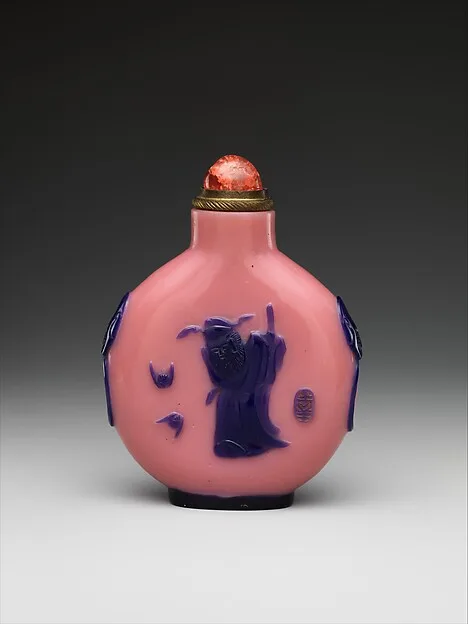
The shortest useful definition
Zhong Kui is best understood as a role that accumulated stories and images: a force who subdues demons, protects thresholds, and sometimes carries the bearing of an official or judge. His sword, cap, robe, beard, attendants, and subdued ghosts recur, but not as a permanent design sheet.
That flexibility is why two objects can both depict Zhong Kui while differing sharply in mood, costume, companions, and purpose.
Why the story changes
Later retellings connect Zhong Kui with an imperial dream, examination failure, loyalty, death, and posthumous appointment. These elements belong to a developing legend rather than a biography preserved in one contemporary Tang source.
A responsible guide identifies the edition, object, and period behind a claim instead of merging every later addition into one timeless origin story.
What the image does
Painted and printed Zhong Kui images could entertain, display virtuoso brushwork, mark a seasonal custom, or perform a protective function at a household boundary. A frightening face may therefore coexist with auspicious intent.
Bats, demons, attendants, swords, and doors gain meaning from their specific composition and period. None should be treated as a universal checklist.
How the game fits
Black Myth: Zhong Kui uses the established name and visible iconographic cues, including the bearded figure and tiger shown in official footage. The project has not published a complete account of how historical traditions relate to its final narrative.
Cathay Codex keeps the official project record, visible footage, historical comparisons, and editorial theories separate until stronger evidence connects them.