
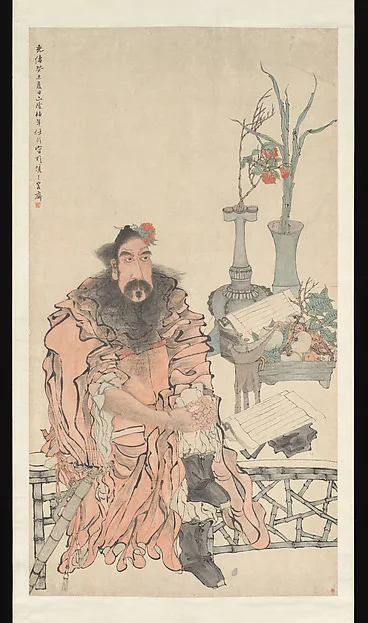
Attribute, action, and authority
A sword turns protective authority into visible action. In Zhong Kui imagery it can signal readiness to confront demons, organize the composition around a diagonal force, or distinguish the central figure from attendants.
Its meaning is created by posture, costume, companions, and setting rather than by the object in isolation.
Why one attribute is not enough
Officials, judges, warriors, door guardians, and other demon-quelling figures may also carry weapons. Attribution depends on the work's title, inscription, provenance, and full iconography.
Calling every sword-bearing bearded figure Zhong Kui erases the very differences a visual atlas is meant to preserve.
The sword in the game record
The 2026 footage shows close sword exchanges and a white-robed swordsman before the closing Zhong Kui montage. The footage supports descriptions of visible weapons and movement.
It does not by itself publish a parry system, weapon tree, final playable identity, or the narrative relationship between every sword-bearing figure.
A better comparison method
First record the blade, grip, costume, movement, timestamp, and surrounding figures. Then compare the complete frame with dated objects and official descriptions.
The result can identify visual resonance while leaving the mechanic and character identity open until the developer confirms them.