
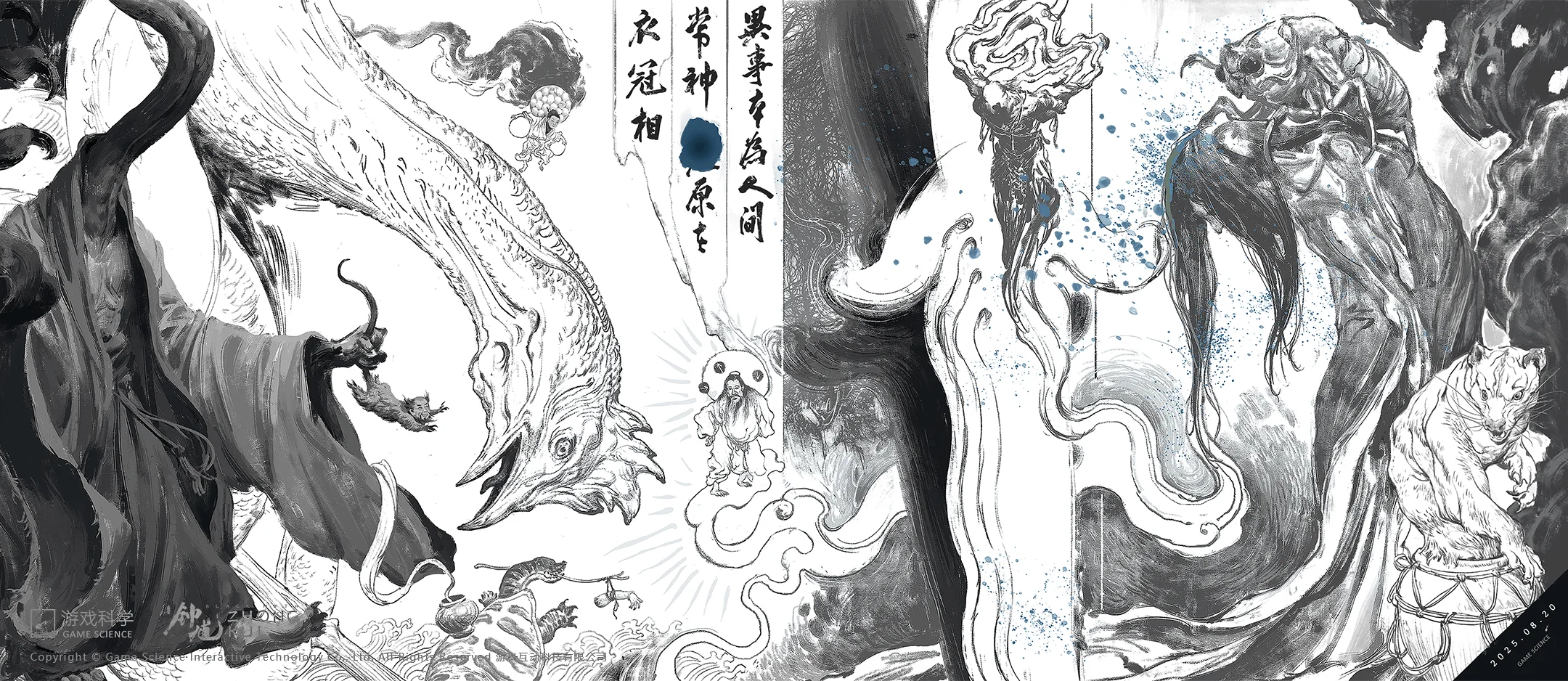
Zhong Kui terms
钟馗, Zhōng Kuí: the core name of the legendary demon-queller and protective figure. 鬼王, ghost king: a title or role emphasizing command over ghosts. 门神, door guardian: a protective function at a threshold, not one unique person's name.
判官, judge: an office or visual type that can overlap with Zhong Kui-like costume and bearing; attribution depends on the specific work.
Motif terms
剑, sword: a recurring attribute of active demon-quelling authority. 虎, tiger: an animal associated in some contexts with force and protection. 蝠, bat: a frequent auspicious sign linked through sound with 福, fortune.
符, talisman: a broad research label for written or marked forms used in ritual and visual traditions; it should not be assigned to a game item as an official name without a primary source.
Spatial terms
门, gate or door: a physical and symbolic boundary. Threshold guardian: an English functional description for an image placed to protect an entrance. 鬼衙, ghost court or ghost yamen: a contemporary editorial phrase on this site for tribunal-like spatial imagery, not a confirmed official location name.
Terms for official architecture carry historical associations, but a modern fantasy environment may recombine them freely.
Evidence terms
Official: directly stated by a primary project source. Observed: visible or audible in released material. Historical: supported by a dated object, text, museum, or scholarly source. Theory: a limited editorial comparison.
Claim limit: the sentence that states what the evidence cannot establish. Primary source: the project-owned page, official upload, dated object record, or original publication closest to the claim.